Every chemistry we work with stands on more than two centuries
of patient discovery. This is the thread that made modern chemical sensing
possible, from a flame burning in a coal mine to the present-day frontier.
A history of sensing
It begins underground, in the dark, with the most
basic instrument imaginable: a flame that flinched in bad air.
1815
The flame was the first sensor
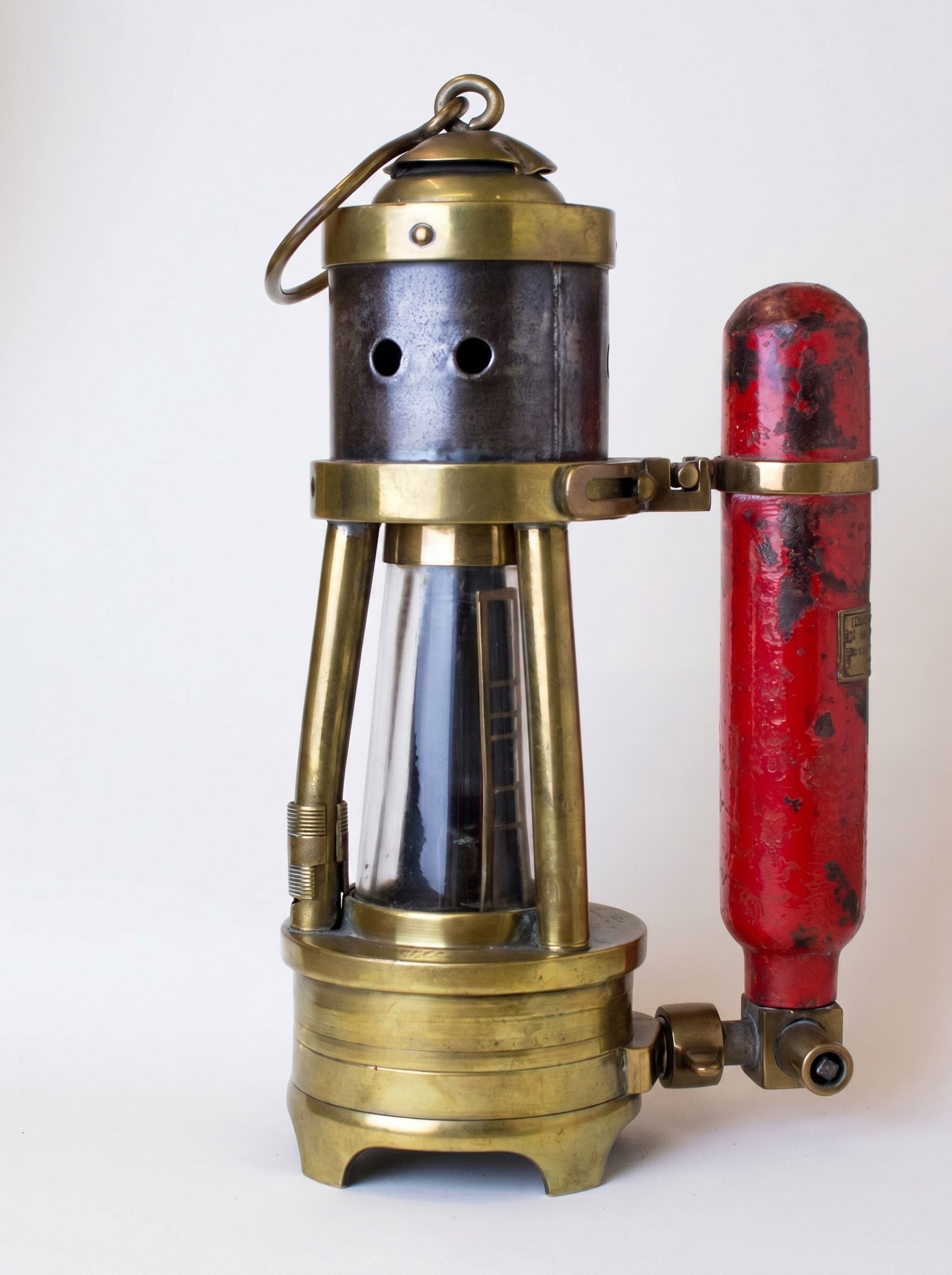
Humphry Davy invented the miners' safety lamp to prevent underground
explosions, but miners soon noticed something useful: the flame itself
changed shape and colour in bad air, stretching tall and turning blue
when methane was present. For most of the nineteenth century, reading
the flame's cap was how danger was judged underground. In 1893, Frank
Clowes refined the idea into a hydrogen-fuelled lamp built specifically
for detecting gas, its taller, cleaner flame revealing methane at far
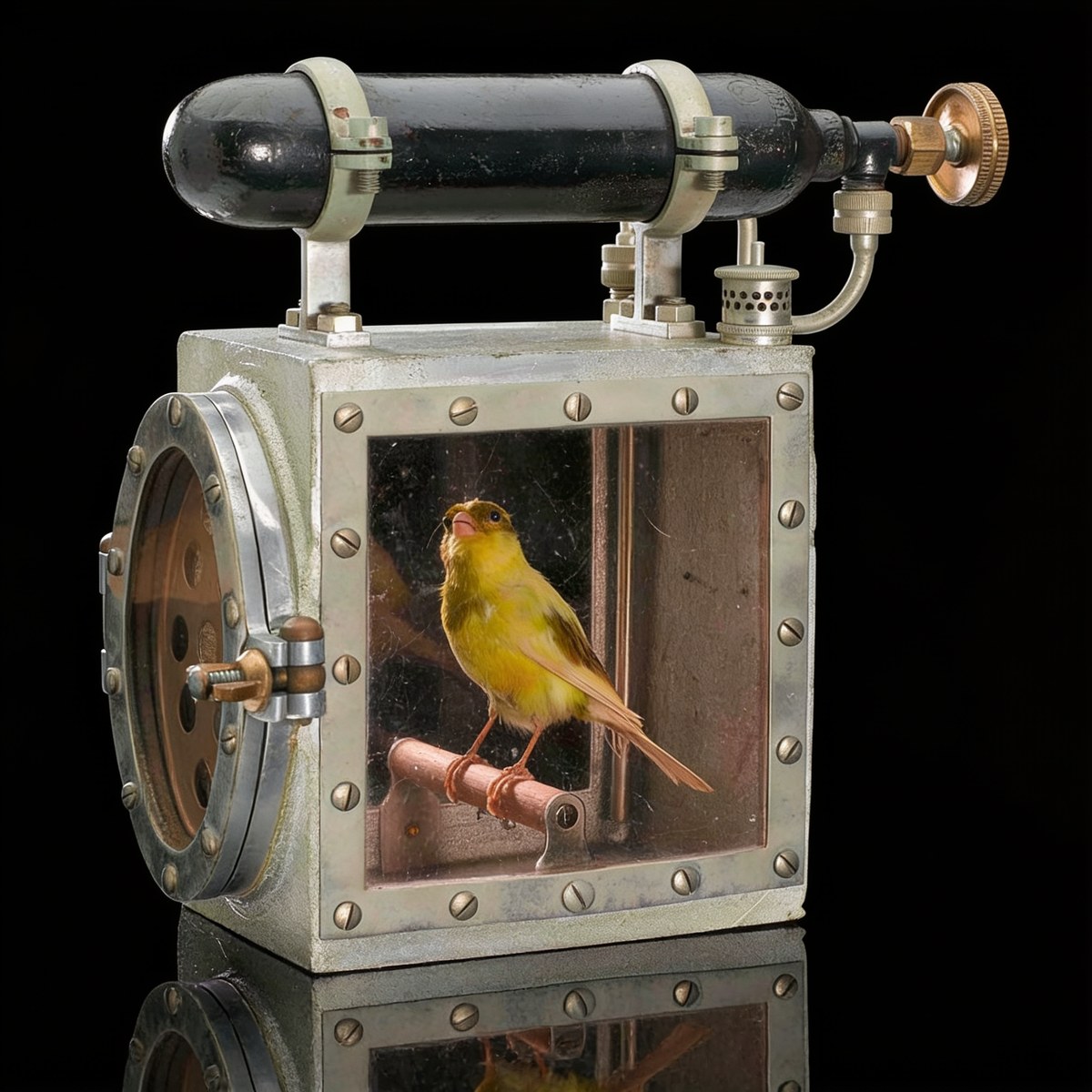
lower concentrations. And in 1896, after a coal mine explosion in Wales,
the physiologist John Scott Haldane added a living detector to the
toolkit: the canary, whose sensitivity to carbon monoxide made it an
early warning that would persist in British mines until 1986. For over
a century, detecting gas meant watching a flame or a bird.
The Clowes hydrogen safety lamp, 1893. A flame designed to reveal methane.A miner's canary cage with oxygen revival apparatus, around the 1920s.
1920s
The first true sensor
The first device to replace human judgement with an electrical signal
came in the 1920s, when Oliver Johnson at Standard Oil developed the
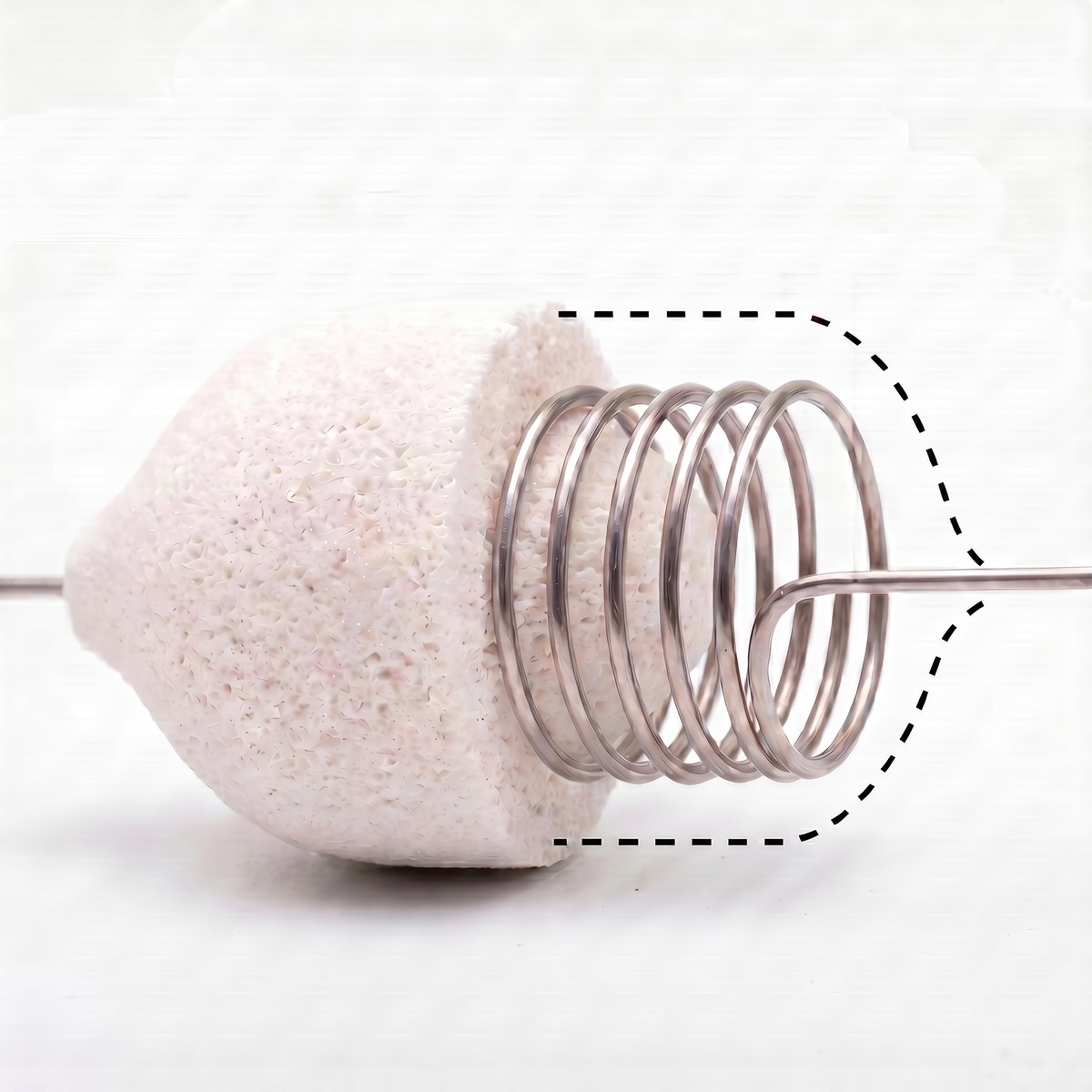
catalytic combustion sensor. A fine platinum coil was embedded in a
porous ceramic bead about a millimetre across, coated with catalyst and
heated to around 500 °C. When combustible gas reached the bead, it
burned there, heating the wire further and raising its electrical
resistance in proportion to the amount of gas. For the first time, no
one had to read a flame or watch a bird. The instrument simply produced
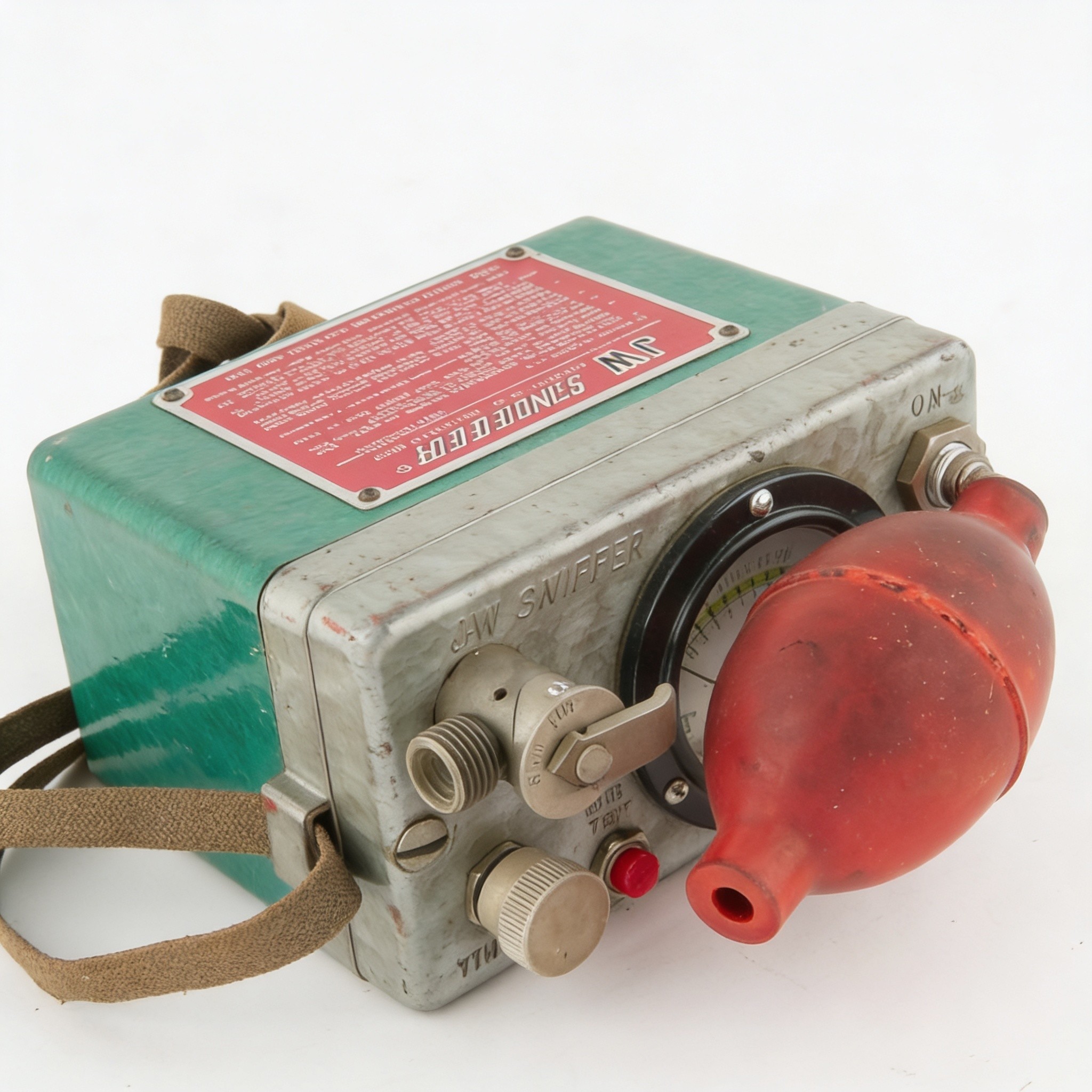
a number. In 1928, Johnson left Standard Oil to co-found Johnson-Williams
Instruments in Palo Alto, a venture often recognised as the first
electronics company in what would become Silicon Valley. This catalytic
bead became the template for industrial gas detection and remains in use
today.
The catalytic bead: a platinum coil in a porous ceramic support about a millimetre across, heated to roughly 500 °C.A later Johnson-Williams field instrument built around the same catalytic bead.
1953
Semiconductors learn to sense gases
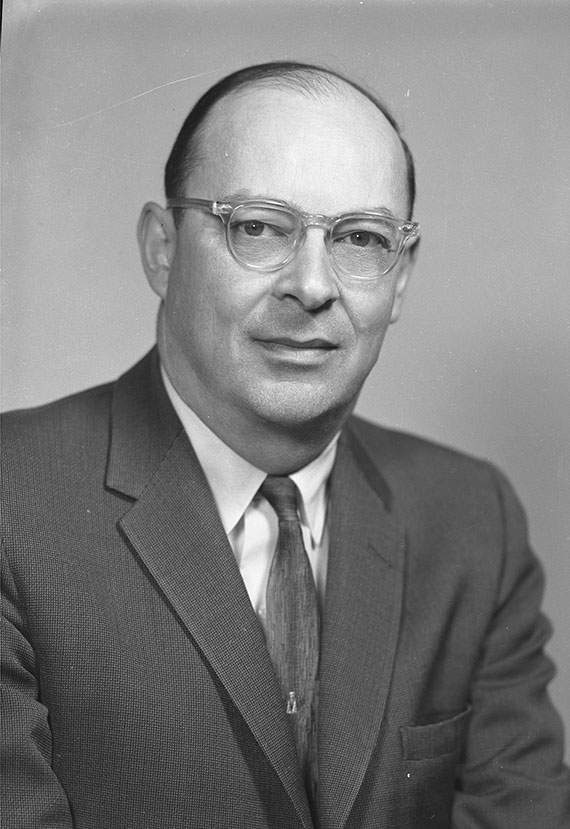
At Bell Labs, Walter Brattain and John Bardeen, who had co-invented the
transistor and would share a Nobel Prize for it, made a quieter
discovery: the electrical behaviour at the surface of a semiconductor
changed when gases touched it. It was almost a side effect of the
semiconductor revolution, but it planted the key idea that a chip's
conductivity could be a chemical sense.
John Bardeen, 1908–1991.Walter Brattain, 1902–1987.
1954
Zinc oxide responds
Soon after, the German physicist Gerhard Heiland, working in Erlangen,
showed that the conductivity of zinc oxide shifted depending on the
gases around it. This confirmed that metal oxides, which are cheap,
stable and easy to make, could be the sensing material rather than
exotic semiconductors. Heiland would later spend two years working with
John Bardeen at the University of Illinois. Zinc oxide remains a
workhorse sensor material to this day.
Gerhard Heiland, 1917–2005.
1962
The modern gas sensor is born, twice
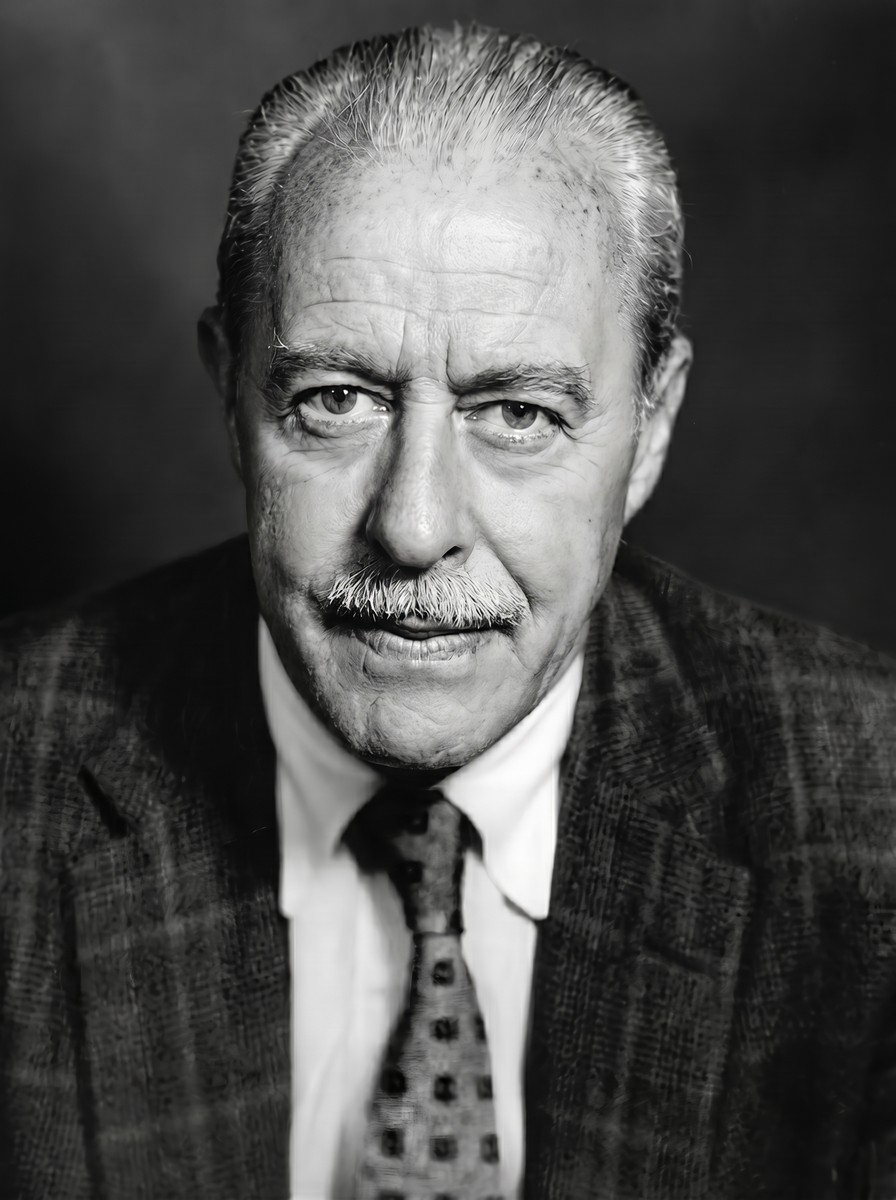
This is the field's founding year, and it has two halves. At Kyushu
University, Tetsuro Seiyama showed that thin films of zinc oxide were
strikingly sensitive to traces of reactive gas. In the same year,
Naoyoshi Taguchi demonstrated the same effect in tin oxide, and
crucially tin oxide was far more stable. Seiyama gave the field its
science; Taguchi gave it a product, founding Figaro Engineering to
bring the tin-oxide sensor to market.
Tetsuro Seiyama, Kyushu University.Naoyoshi Taguchi, founder of Figaro Engineering.
1967
Two chemistry breakthroughs
Two quiet advances this year still shape sensor fabrication. First, the
American chemist Maggio Pechini patented a method, using citric acid and
ethylene glycol, to trap metal ions evenly in a polymer network before
firing them into a pure oxide. Designed for capacitors, it became one of
the standard recipes for making sensor materials and is still called the
Pechini method. Second, researchers showed that adding a trace of a noble
metal such as platinum to a metal oxide could dramatically change what it
detected: the birth of doping a sensor to tune its sense of smell.
1971
The first commercial sensor ships
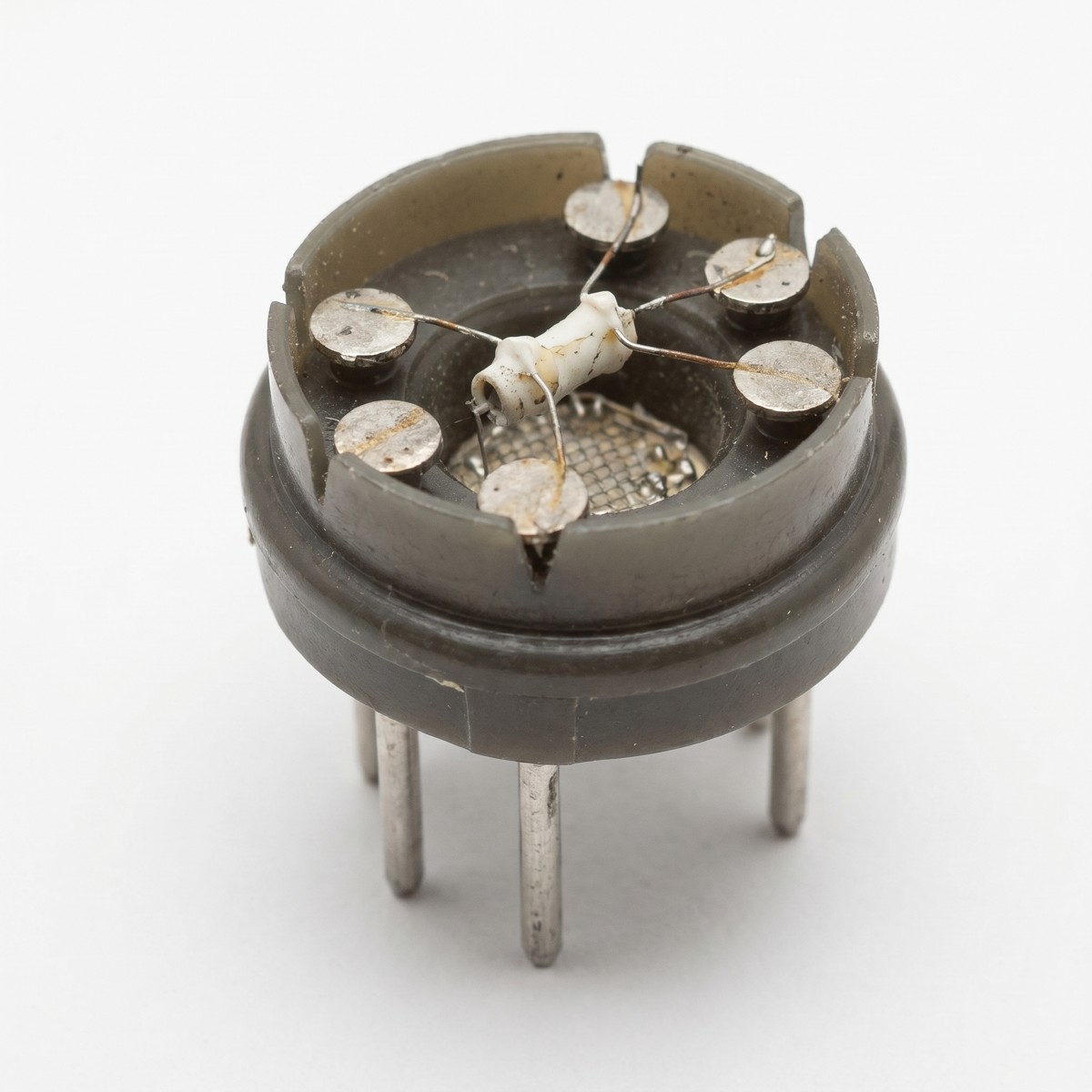
Figaro Engineering brought the first commercial semiconducting gas sensor
to market: the Taguchi Gas Sensor. A small heated bead of doped tin oxide
whose resistance dropped in the presence of combustible and reducing
gases, it became the template for the entire industry. The inexpensive
metal-oxide sensors in gas alarms today, including the modules used in
early Sniffi prototypes, are its direct descendants.
The Taguchi Gas Sensor, the template for the industry that followed.
1970s–2000s
A craft becomes a science
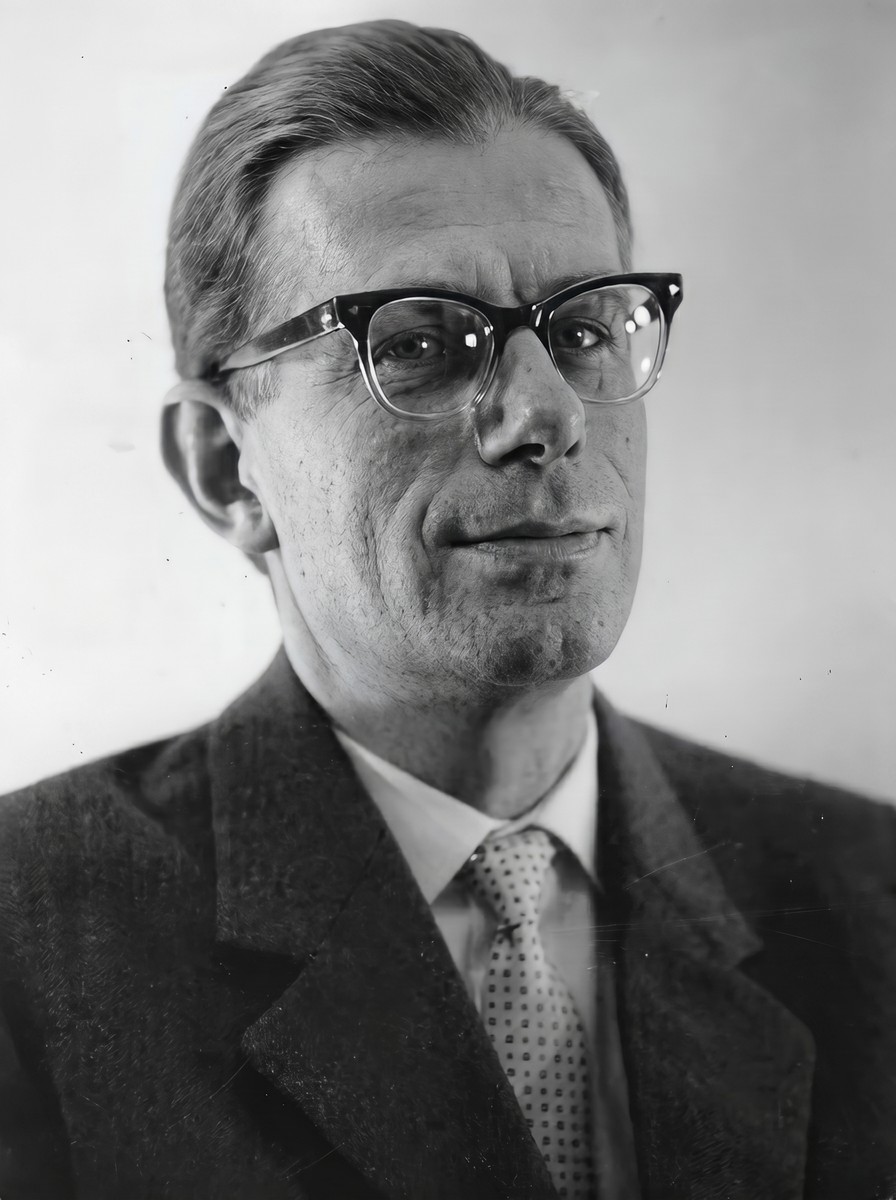
The person who turned sensing from trial and error into a discipline was
Noboru Yamazoe, Seiyama's successor at Kyushu University. Across three
decades he built the framework still taught today: a sensor has a
receptor job, which is the surface chemistry that grabs the target gas;
a transducer job, which is turning that into an electrical signal; and a
utility factor, which is how easily gas reaches the active material. His
work explains why grain size, porosity and dopants matter as much as the
base material, and it underlies every deliberate fabrication choice in a
modern sensor.
1982
The electronic nose
At the University of Warwick, Krishna Persaud and George Dodd proposed
copying biology. Instead of chasing one perfectly selective sensor, use
an array of imperfect sensors with overlapping sensitivities and let
pattern recognition decode the combined response, which is how a nose
and a brain identify a smell between them. This is the founding idea of
the electronic nose, and the architecture behind the detection arrays we
build: many sensors, one learned signature.
Professor Krishna C. Persaud, University of Manchester.
1998
Sensing leaves Earth
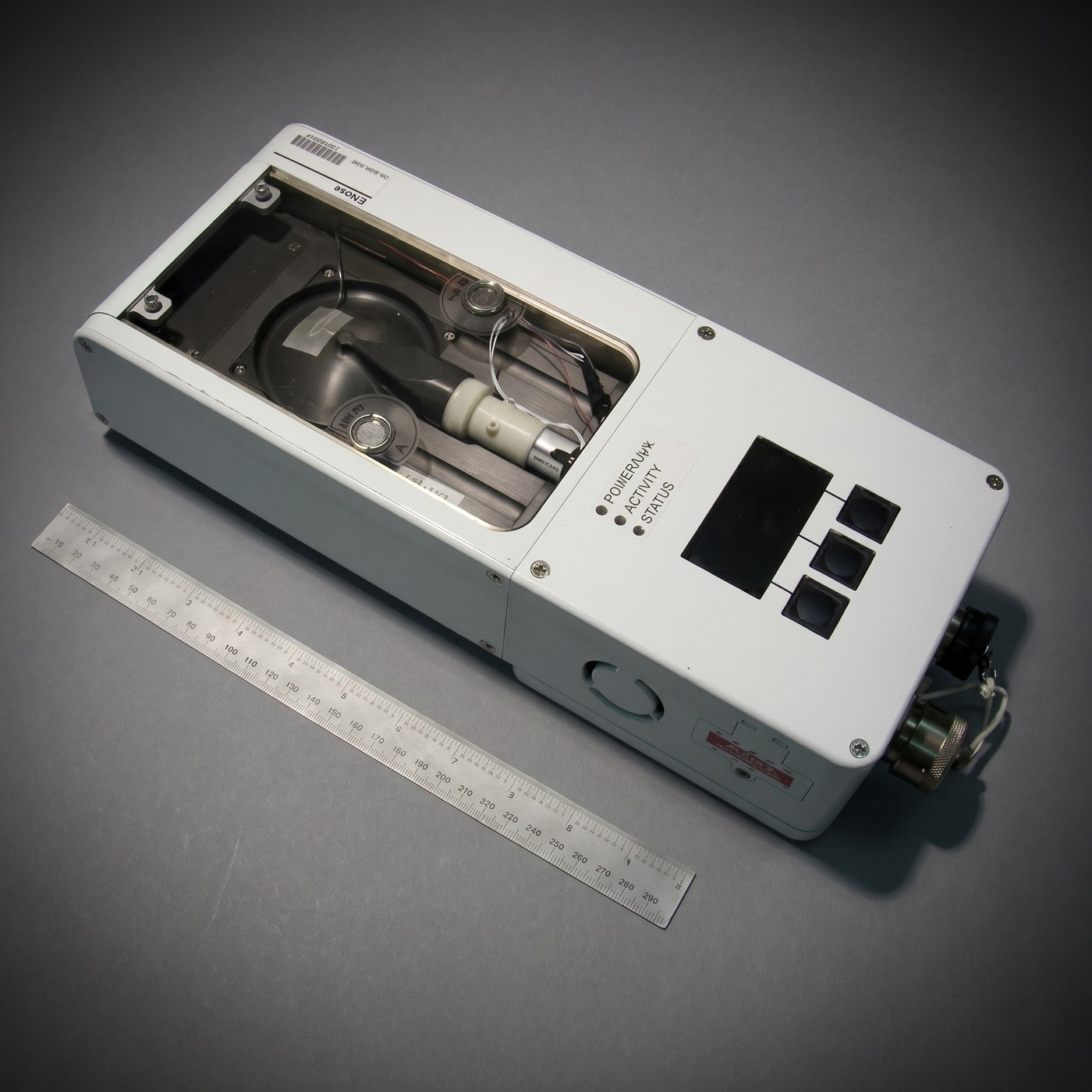
NASA's Jet Propulsion Laboratory faced a problem no one on Earth quite
had: detecting chemical leaks inside a sealed spacecraft. From 1995 to
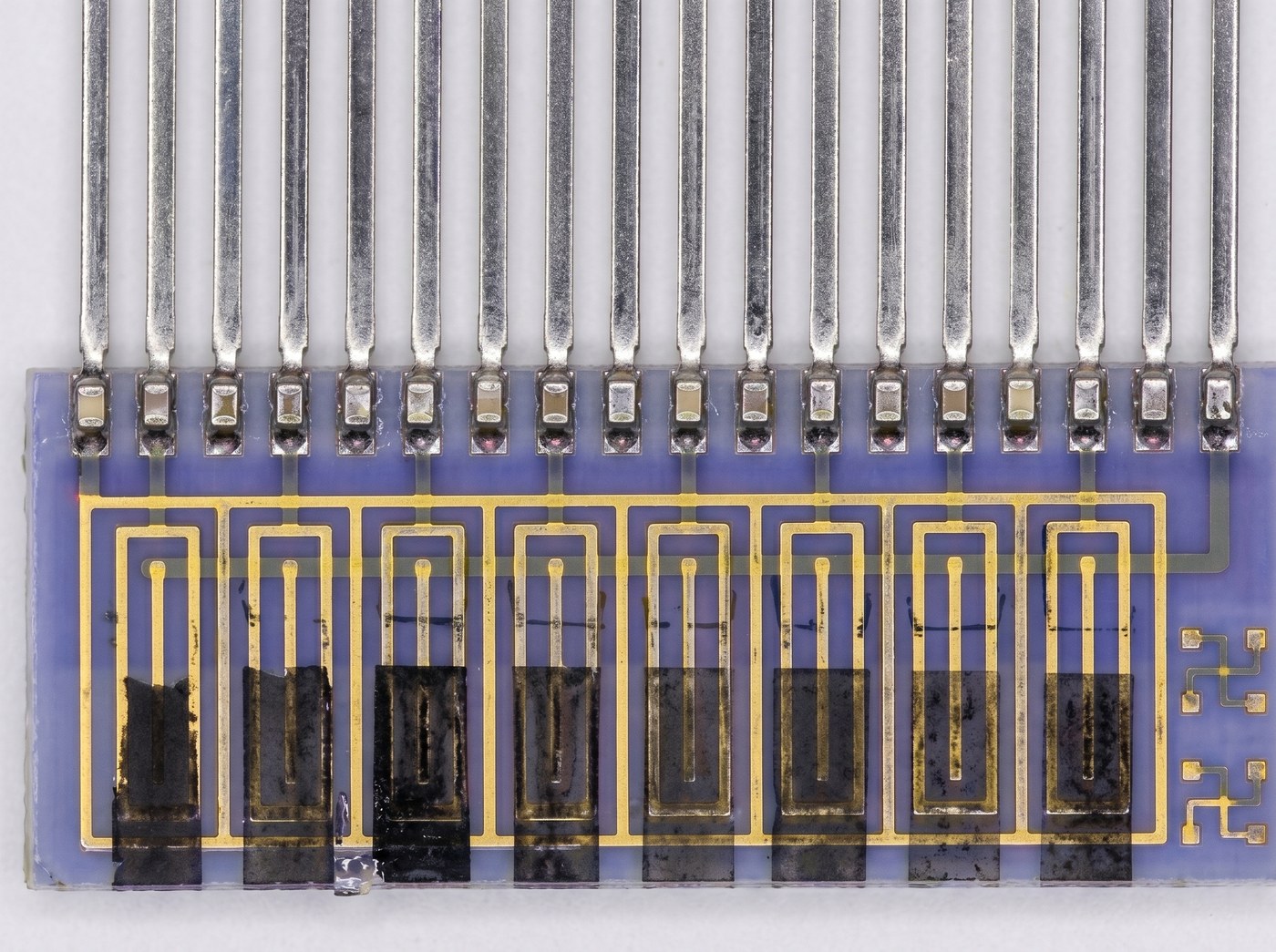
2008, a JPL team led by Margaret Ryan built the Electronic Nose, an array
of 32 sensors made from insulating polymer films loaded with carbon
black. When a target vapour met a film, it dissolved into the polymer and
made it swell, spreading the carbon particles further apart and raising
the film's electrical resistance. Different polymers swelled differently
for different chemicals, and the pattern across all 32 films identified
what was present. It first flew on Shuttle mission STS-95 in October
1998, and a third-generation unit ran continuously aboard the
International Space Station. The programme proved that polymer sensing,
at room temperature and low power with no glowing-hot heater, was a
viable alternative to the metal-oxide chemistry that had dominated the
field for thirty years.
The ENose flight unit. Image: NASA/JPL-Caltech.A close-up of the polymer-composite sensor array.
Where the field is now
The frontier
Sixty years after the modern gas
sensor was born, the field is advancing on every front at once: smaller
hardware, smarter materials, lower power, and entirely new physics for
turning molecules into signals.
Shrinking the array onto a chip
The clearest hardware trend is integrating multiple sensors onto a
single micro-machined silicon chip. Recent systems pack arrays onto
chips a few millimetres across, using tiny on-chip heaters that draw a
fraction of the power older bead-style sensors needed. As the hardware
shrinks, sensing can move into places it never could before: phones,
wearables, embedded devices, distributed monitoring networks.
Graphene and 2D materials
Researchers are reaching beyond classic metal oxides to nanomaterials
such as graphene and other atom-thin materials. Their enormous surface
area gives more places for gas molecules to land, and their high
conductivity can let a sensor operate at much lower temperatures,
sometimes room temperature, with faster response. The trade-off is
reproducibility: these materials are notoriously hard to manufacture
identically batch after batch.
Molecularly imprinted polymers
One way to engineer selectivity is to build it into the material
itself. Researchers polymerise a flexible network around a template
molecule, the exact target they eventually want to detect, then wash
the template out. What remains is a polymer riddled with cavities that
match the target's shape and binding pattern. Only molecules that fit
the cavity bind back into it, like a key in a lock.
Metal-organic frameworks
The same principle, but in a rigid crystal. A metal-organic framework
is a microscopic three-dimensional lattice of metal anchor points
connected by organic linker molecules: a molecular sponge riddled with
pores of an exact size and shape. A single gram can hold the surface
area of a football field. Because the pores only admit molecules that
physically fit, the selectivity is designed into the crystal structure
itself.
Optical microring resonators
A microring resonator is a tiny ring of glass, tens of micrometres
across, that traps laser light circulating around its rim like a
whisper travelling around a curved gallery. The light builds up at a
specific resonant wavelength. When a molecule lands on the ring's
surface, that resonance shifts by a measurable amount. Researchers have
demonstrated detection down to single molecules in laboratory
conditions.
Borrowing from biology
Researchers are designing short peptides, some copied from the
odorant-binding proteins a fruit fly uses to smell, that latch onto one
specific target molecule, then laying them across the surface of a
graphene or carbon-nanotube transistor. When a target molecule binds to
a peptide, it shifts the electrical current running through the
transistor. Because each peptide is chosen to fit a single compound,
these sensors can be extraordinarily selective. The catch is
durability: biological parts are fragile and hard to manufacture and
stabilise.
Where we come in
Sniffi
We take lessons from each generation of this work. We
start from the metal-oxide chemistry that has held the field since 1962,
refined through every dopant, every grain-size principle and every
electronic-nose insight that followed. We compute the surface chemistry
itself, so that the choice of oxide, dopant and firing follows from the
physics rather than from precedent.